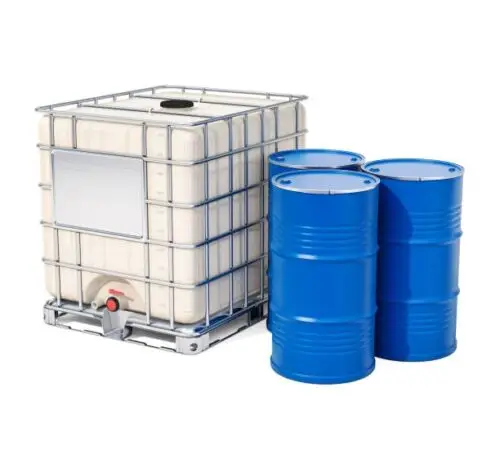
Description
YDN385 High-Imino Melamine Crosslinker for Aqueous Polymer Systems
A fully water-soluble methylated melamine resin designed for hydroxyl- or amide-functional waterborne polymers, including emulsion topcoats, textile coatings, nonwoven binders and waterborne industrial coatings.
Product Overview
YDN385 is a fully water-soluble, high-imino methylated melamine-formaldehyde resin designed as a crosslinking agent for aqueous polymer systems.
It can be evaluated in waterborne formulations containing hydroxyl or amide functionality where fast curing response, film hardness, water resistance, chemical resistance and durability are required.
Unlike general-purpose water-based melamine resins, YDN385 is positioned for higher-reactivity crosslinking applications in emulsion topcoats, textile coatings, nonwoven binders, industrial waterborne coatings and other functional polymer systems.
YDN385 is especially suitable for formulators who require a fully water-soluble melamine crosslinker with high imino functionality, high solids content and strong compatibility with selected waterborne polymer systems.
Technical Positioning: Fully Water-Soluble High-Imino Melamine Crosslinker
YDN385 is designed for waterborne systems requiring:
- Fully water-soluble melamine resin
- High imino functionality
- Methyl etherified melamine structure
- High solids content
- Fast curing response
- Crosslinking of hydroxyl- or amide-functional waterborne polymers
- Improved hardness and resistance properties
- Low-VOC formulation support
- Compatibility with selected aqueous polymer dispersions
This technical positioning makes YDN385 suitable for a wide range of waterborne polymer applications beyond conventional coating systems.
Main Application Areas
- Emulsion Topcoat Systems
YDN385 can be evaluated in emulsion topcoat systems where waterborne polymers require improved film hardness, resistance properties and curing response.
It is suitable for hydroxyl- or amide-functional emulsion polymers and related aqueous formulations where formulators need better durability, water resistance, chemical resistance and thermoplastic resistance after curing.
Typical evaluation areas include:
- Waterborne emulsion topcoats
- Functional polymer topcoats
- Industrial emulsion coatings
- Protective surface finishes
- Low-VOC topcoat systems
- Textile Coatings
YDN385 can be evaluated in water-based textile coating systems where coated fabrics require improved wash resistance, abrasion resistance, surface durability and chemical stability.
This application is different from textile finishing resin systems. YDN385 is more suitable for textile coatings where a waterborne polymer coating layer requires crosslinking support.
Typical evaluation areas include:
- Coated fabrics
- Functional textile coatings
- Wash-resistant textile coating systems
- Protective fabric coatings
- Water-based textile coating formulations
For textile finishing applications such as anti-wrinkle finishing, durable press finishing and fabric stiffening, YDN8080A may be a more suitable product option.
- Nonwoven Binder Systems
YDN385 can be evaluated in nonwoven binder systems where crosslinking performance, wet strength, dimensional stability and durability after curing are required.
In waterborne binder formulations, YDN385 may support stronger network formation when used with compatible hydroxyl- or amide-functional polymers.
Typical evaluation areas include:
- Nonwoven web bonding
- Waterborne nonwoven binder systems
- Wet strength improvement
- Dimensional stability support
- Durable nonwoven treatment systems
- Waterborne Industrial Coatings
YDN385 supports waterborne industrial coating formulations where film hardness, water resistance, chemical resistance and low-VOC formulation development are important.
It can be evaluated in selected acrylic, polyester, alkyd, polyurethane and hybrid waterborne systems, depending on compatibility, pH stability, catalyst selection and final performance requirements.
Typical evaluation areas include:
- Waterborne industrial topcoats
- Metal coatings
- Equipment coatings
- Functional surface coatings
- Low-VOC industrial coating systems
- Wood Coatings and Waterborne Lacquers
YDN385 can be evaluated in waterborne wood coatings and lacquers where hardness, water resistance, chemical resistance and curing performance are required.
It may be suitable for wood coating formulators developing low-VOC systems for furniture, panels, decorative wood products and water-based lacquers.
Typical evaluation areas include:
- Waterborne wood lacquers
- Furniture coatings
- Decorative wood coatings
- Panel coatings
- Water-resistant wood finishes
- Specialty Aqueous Polymer Systems
YDN385 may be evaluated in specialty aqueous polymer systems containing hydroxyl or amide functionality.
Final suitability depends on polymer type, functional group content, pH stability, catalyst system, curing condition and required performance.
Typical evaluation areas include:
- Functional polymer dispersions
- Aqueous resin systems
- Specialty binder systems
- Waterborne surface treatment formulations
- Crosslinking systems for hydroxyl- or amide-functional polymers
Key Benefits of YDN385
Fully Water-Soluble
YDN385 is fully water-soluble, making it suitable for waterborne polymer systems and aqueous formulations.
High-Imino Functionality
The high imino and hydroxymethyl structure supports efficient crosslinking and strong curing response in properly designed systems.
High Solids Content
With solid content typically ≥78%, YDN385 supports efficient formulation design for waterborne systems.
Strong Crosslinking Response
YDN385 can support improved film hardness, water resistance, chemical resistance and durability after proper curing.
Suitable for Hydroxyl- or Amide-Functional Polymers
YDN385 is designed for aqueous polymer systems containing reactive hydroxyl or amide functionality.
Low-VOC Formulation Support
As a waterborne melamine crosslinker, YDN385 can support low-VOC formulation development compared with solvent-heavy systems.
Broad Application Flexibility
YDN385 can be evaluated in emulsion topcoats, textile coatings, nonwoven binders, industrial coatings, wood coatings and specialty aqueous polymer systems.
Typical Technical Properties
| Property | Typical Value |
| Product Type | Fully water-soluble high-imino methylated melamine-formaldehyde resin |
| Appearance | Transparent viscous liquid |
| Solvent | Water |
| Solid Content | ≥78% |
| Viscosity | 800–1500 mPa·s |
| Density | Approx. 1250 kg/m³ |
| Flash Point | >100°C |
| Free Formaldehyde | ≤0.5% |
| pH | 8.5–9.5 |
| Solubility | Fully water-soluble |
| Shelf Life | 6 months under recommended storage conditions |
Note: The above values are typical internal control values and should not be interpreted as final product specifications for every batch. Please request the latest TDS before formulation evaluation.
Compatibility with Waterborne Resin Systems
YDN385 is designed for waterborne polymer systems. Compatibility should be confirmed through blend stability, pH stability, curing response and final film performance testing.
| Resin System | Compatibility | Application Direction |
| Hydroxyl-functional emulsion polymers | Excellent | Emulsion topcoats, functional topcoats |
| Amide-functional waterborne polymers | Excellent | Specialty aqueous polymer systems |
| Waterborne acrylic systems | Excellent | Industrial coatings, emulsion finishes |
| Polyester dispersions | Excellent | Baking coatings, metal coatings, functional finishes |
| Alkyd emulsions | Good | Wood coatings, general industrial coatings |
| Polyurethane emulsions | Good | Flexible coatings, hybrid systems |
| Epoxy dispersions | Moderate | Requires formulation validation |
Formulation & Processing Guidance
When evaluating YDN385 in aqueous polymer systems, formulators should consider the following factors:
Polymer Functionality
YDN385 is best evaluated in waterborne polymer systems containing hydroxyl or amide functionality. The level of reactive functionality will influence crosslinking efficiency and final performance.
Resin System Compatibility
Different acrylic, polyester, alkyd, polyurethane, emulsion and hybrid systems may show different compatibility. Blend stability and pH stability should be tested before production.
Target Performance
The formulation should be adjusted based on the target performance, such as film hardness, water resistance, chemical resistance, abrasion resistance, adhesion, flexibility or wash durability.
Catalyst Selection
Catalyst type and dosage can significantly influence curing response, storage stability, pot life, yellowing tendency and final resistance properties.
Curing Conditions
Curing temperature and time should be optimized according to substrate, film thickness, polymer type and final performance requirements.
pH and Storage Stability
The pH of the final formulation may affect storage stability and curing behavior. Customers should evaluate formulation stability under their own production and storage conditions.
Additive Compatibility
YDN385 should be tested with additives, co-solvents, neutralizing agents, surfactants, softeners, wetting agents and other formulation components used in the customer’s system.
Recommended Testing Before Production
Before commercial use, customers are advised to evaluate:
- Blend stability
- pH stability
- Storage stability
- Pot life
- Curing response
- Film hardness
- Water resistance
- Solvent resistance
- Chemical resistance
- Abrasion resistance
- Adhesion
- Flexibility
- Gloss and appearance
- Yellowing tendency
- Wash durability, if used in textile coating systems
- Wet strength, if used in nonwoven binder systems
- Final VOC and formaldehyde-related requirements
Testing should be conducted under the customer’s own polymer system, substrate, catalyst, curing and performance conditions.
Compliance & Validation Notice
YDN385 is designed to support waterborne and low-VOC formulation development.
Final compliance with customer specifications, VOC limits, formaldehyde requirements or local regulations depends on the complete formulation, curing process, substrate and third-party test results.
Customers should validate final performance and compliance under their own production conditions before commercial use.
YDNResin can provide TDS, SDS and typical product information for customer-side evaluation.
Packaging & Storage
YDN385 should be stored in sealed containers under recommended storage conditions.
Recommended storage guidance:
- Keep containers tightly closed after use.
- Store in a cool, dry and well-ventilated area.
- Avoid direct sunlight and excessive heat.
- Avoid freezing.
- Use clean tools and containers during handling.
- Avoid contamination during storage and use.
- Please refer to the latest SDS for detailed handling and safety information.
Shelf life is typically 6 months under recommended storage conditions. Please request the latest TDS and SDS before use.
Request YDN385 TDS, SDS and Sample Support
Looking for a fully water-soluble high-imino melamine crosslinker for aqueous polymer systems?
YDNResin can support formulators, manufacturers and raw material distributors with technical documents, sample evaluation and application discussion.
You can contact us for:
- YDN385 TDS
- YDN385 SDS
- YDN385 sample support
- Emulsion topcoat formulation discussion
- Textile coating evaluation support
- Nonwoven binder compatibility discussion
- Waterborne industrial coating support
- Acrylic, polyester, alkyd and hybrid system compatibility discussion
- Bulk supply and packaging options
CTA Buttons
Request TDS & SDS
Request YDN385 Sample
Discuss Your Polymer System
FAQ
What is YDN385 used for?
YDN385 is used as a fully water-soluble high-imino melamine crosslinker for aqueous polymer systems, including emulsion topcoats, textile coatings, nonwoven binders, waterborne industrial coatings, wood coatings and specialty waterborne formulations.
Is YDN385 only used for coatings?
No. YDN385 can be evaluated in multiple waterborne polymer systems, including textile coatings, nonwoven binder systems, emulsion topcoats, industrial coatings and specialty aqueous polymer systems.
What types of polymers can YDN385 work with?
YDN385 is designed for waterborne polymer systems containing hydroxyl or amide functionality. Compatibility and performance should be confirmed through customer-side testing.
Can YDN385 be used for textile coating?
Yes. YDN385 can be evaluated in water-based textile coating systems where wash resistance, abrasion resistance, surface durability and chemical stability are required.
Can YDN385 be used in nonwoven binders?
Yes. YDN385 can be evaluated in nonwoven binder systems where improved crosslinking performance, wet strength and durability after curing are required.
Is YDN385 fully water-soluble?
Yes. YDN385 is fully water-soluble and is designed for waterborne polymer systems and aqueous formulations.
What is a high-imino melamine crosslinker?
A high-imino melamine crosslinker contains reactive imino and hydroxymethyl functionality that can support efficient curing and crosslinking performance in properly designed formulations.
How is YDN385 different from general water-based melamine resin?
YDN385 is a high-imino methylated melamine resin with full water solubility and strong crosslinking response. It is designed for higher-reactivity waterborne polymer systems, while general water-based melamine resins may be more suitable for textile finishing or lower-reactivity applications.
What should be tested before production?
Customers should evaluate blend stability, pH stability, storage stability, curing response, hardness, resistance properties, adhesion, flexibility and final application-specific performance.
Can YDNResin provide sample and technical support?
Yes. YDNResin can provide TDS, SDS, sample support and technical discussion based on the customer’s polymer system and application requirements.
Related Technical Guides
- High-Imino Melamine Crosslinker Selection Guide
- Melamine Crosslinkers for Emulsion Topcoat Systems
- Melamine Resin for Textile Coatings
- Melamine Resin for Nonwoven Binder Systems
- Waterborne Amino Resin Crosslinkers for Industrial Applications
- Crosslinking Hydroxyl- and Amide-Functional Waterborne Polymers
- Fully Water-Soluble Melamine Resin for Low-VOC Systems